Shopper Experience
25 April 2023
Klarna grows personalized shopping, with AI and experts
A redesigned Klarna app now has tools to manage ads, build creator storefronts and resell items.
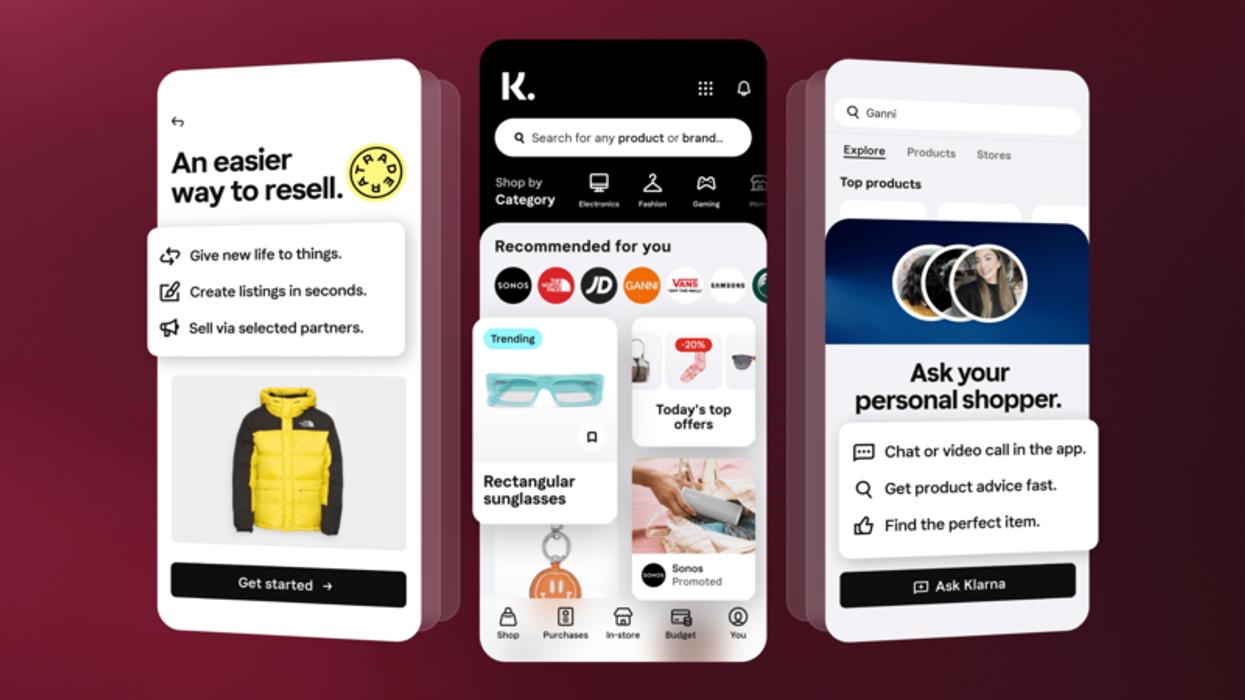
Klarna's new shopping features. (Courtesy photo)
Klarna is launching a series of shopping-focused app upgrades that are designed to boost discovery with AI, provide personalized assistance and create new ways for retailers and creators to connect with users.
The improvements show Klarna tapping into rising currents in commerce, such as personalization, retail media, resale and creator commerce. Taken together, the rollout doubles as a look at where online shopping experiences are heading.
The expansion comes as Klarna is seeking to boost its standing as a shopping destination. It is well-known for payment services such as Buy Now Pay Later, but is seeking to grow tools that help consumers to find, browse and buy items. There’s a big base from which to build: Klarna’s app attracts 150 million consumers, and includes 500,000 retailers.
“Over the last 18 years, we’ve transformed into a global shopping destination with smart tools for consumers around the world,” said Klarna CEO Sebastian Siemiatkowski. “The new tools we’re launching today will create richer, more enjoyable experiences for everyone along the shopping journey and create tremendous opportunities for retailers to grow their business.”
The launch, known as Spotlight Spring, follows a group of Klarna shopping updates that rolled out in the fall to introduce tools for search, shoppable video and a creator platform.
Here’s a look at the latest shopping features debuting from Klarna:
Klarna is putting its in-house AI-powered recommendation engine to work for shoppers.
A new feed on the app will provide personalized recommendations on products, as well as deals. The feed updates in real time, and is designed to become increasingly tailored as it learns more about the user’s preferences.
“Our new AI-powered discovery shopping feed is the next evolution of the Klarna app becoming the starting point for every purchase,” Siemiatkowski said. “This builds on a ton of initiatives we’re working on in the AI space, to provide a greater level of personalization to consumers that was once thought impossible.”
This builds on the fall launch of a search and compare tool that helped to curate the best prices and most efficient delivery options by comparing offerings across thousands of websites. Now, Klarna’s tools will provide recommendations that include product features specific to the user, right in a feed on the app.

Ask Klarna
Not all of the personalized shopping features in Klarna’s app will be tech-based. The new group of features also includes a personal shopping assistant that provides access to human experts through chat or video call.
Starting with the luxury sector, it’s designed to help shoppers find the right products across brands and retailers.
The capability to ask an associate a question is built-in to in-person shopping. Klarna said its recent research showed that 85% of US consumers would like a service where they can speak with experts to be able to access more information about a product while shopping online, as well. This new service is a direct answer to that feedback.
With this launch, Klarna has also redesigned its app into five distinct sections: Shop, Purchases, In-Store, Budget and You. This is designed to combine and streamline features for shopping and personal financial information, as well as delivery times, returns info and receipts.

Klarna Ads Manager. (Courtesy photo)
Along with tools for shoppers, Klarna is also rolling out features for retailers. The app is adding a self-service ad platform for retailers to an existing suite of ad offerings. Ads Manager is a new offering for retailers seeking to leverage the first-party data on Klarna’s platform to reach its high-intent audience of shoppers. Klarna said it offers brands more efficiency in areas including ad creation, audience targeting, and in-platform reporting for campaign optimization.
The Ads Manager reflects Klarna’s growing ambition to expand its foothold in retail media, which has grown rapidly as brands and retailers see increasing efficiency in advertising that appears on the platforms where consumers shop. Klarna said marketing revenue was up 131% in 2022, and additional tools designed for advertisers will help it double down on the opportunity to grow.

Creator Shops on Klarna. (Courtesy image)
Following the fall launch of a platform that provides a place for creators to connect with retailers, recommend products and share content, Klarna will now feature tools that allow creators to launch their own storefronts on its website.
This is designed to provide a space for shoppers to easily find and browse product recommendations from a creator. Along with the forthcoming ability to share content through the Klarna app, creators can also include links to every item from any social platform, offering the ability to boost revenue.
"The Klarna Creator Platform has opened up a new world of opportunities when it comes to affiliate content," said content creator Lydia Tomlinson, in a statement. "The transparency between what I link and what the brand can see has helped me establish new relationships with brands that I have loved and shopped at for years."
Creator Shops are not yet available in the U.S., but will roll out "soon" as part of a phased launch.
As consumers seek eco-friendly options, the market is moving toward resale. Over one-third of consumers are more likely to sell an item secondhand when compared to a year ago, Klarna said. Now, the app is seeking to provide a way to ease the process of getting a resale listing started.
The app will now include a “resell” button that enables users to start a listing on a secondhand marketplace beyond Klarna that contains an item previously purchased from Klarna. Then, the system pre-fills product details and images for the listing,.
The feature is now available in Sweden with the resale platform Tradera, and is set to go live with other partners around the world “soon,” said Klarna.