Marketing
07 July 2022
This startup built Gen Z's version of the focus group
Working with brands including Moët Hennessy and NASCAR, Knit recently raised $3.5M.
Knit team members. (Courtesy photo)

Working with brands including Moët Hennessy and NASCAR, Knit recently raised $3.5M.
Knit team members. (Courtesy photo)
In order to understand what resonates with consumers, it’s important to talk to them.
Consumer brands have long recognized this, and put lots of effort in pursuit of gaining the customer voice. They deploy research teams that conduct focus groups to seek out feedback from consumers about their own behavior, as well as what might motivate them to purchase a particular product.
Under this model, the qualitative side of the research is key. Being able to hear directly from consumers allows brands to incorporate their voice in strategies they set out, and decisions they make. It’s where the pulse of the consumer is taken, and effectively de-risks what they release in the meantime.
In a digital age, however, these focus groups can feel like increasingly cumbersome endeavors. Brands might spend weeks – not to mention tens of thousands of dollars– traveling around to talk to groups of dozens of people. And we’ll emphasize here that they’re doing this in-person.
“That’s not going to work in today’s digital environment,” Aneesh Dhawan told The Current. “The world is moving too fast. Consumer preferences are changing too quickly.”
Dhawan is the CEO of a startup with an answer to the focus group for the time of TikTok.
Knit offers a platform that allows brands to upload market research questions or ideas for new creative, which in turn go to a network of more than one million Gen Zers. In return, the brands get feedback through a 30-90 second video, as well as via traditional survey format. Research that has traditionally required getting a big group together in the same place is now available on-demand.
“Because it’s asynchronous, you’re still able to talk to hundreds of people, but it happens within hours and you’re still getting that qualitative feedback through these videos,” said Dhawan.
The platform also has AI tools that allow video analysis of the feedback in what the company said is minutes. This helps brands turn qualitative feedback into quantitative data. With brands able to tap this network frequently, consumer feedback can be incorporated at multiple steps of a team’s process.
With brands including Moët Hennessy and NASCAR signed on as customers, the company recently closed on $3.55 million in seed funding. The investment round was led by Silicon Road Ventures with participation from Bread and Butter Ventures, Alumni Ventures, Bootstrappers.mn, Operate Studio and TiE Global Angels.
While the Gen Z voice can often be painted as elusive, the startup has a direct understanding of the cohort, since the founders are in the group themselves. For his part, Dhawan has long been captivated by the power of connecting brands and Gen Z consumers. He launched a cause marketing agency called Feed A Friend at the age of 16, and went on to start a nanoinfluencer platform specifically designed to help connect brands and the age cohort.
Cofounder and CTO Raahish Kalaria previously founded adtech company FreeCopy and computer vision-based home automation solutions company One Remote.
Through their personal and professional experience, the entrepreneurs saw how their digitally native generation can be difficult to reach for research by brands, and their tastes and behavior change quickly. At the same time, the video format of TikTok and YouTube was a primary means of creating content and interaction. They sought to put those insights together to build the company, offering a large, diverse and unbiased group of Gen Zers for brands, with feedback delivered through a medium that meets them where they are.
Starting the company while in college, Dhawan and Kalaria participated in the Techstars accelerator’s 2019 ‘Farm to Fork’ program, which was a key building block toward the launch of Knit in January 2021. Working with marketing and innovation teams, the company now has over 30 enterprise customers, including the WNBA and Harman International (maker of JBL Speakers). It also works with startups.
With an Austin-headquartered team of about a dozen people, Dhawan said the company is working to expand the available voices in provides access to beyond Gen Z, enabling brands to tap consumer insights in all age groups. In one step toward that, it has a network of four million millennials to draw on. Knit also wants to make these insights available from consumers globally, and plans to start expansion in the EMEA and LATAM regions.
“One of the biggest leaps that we’ve made and are continuing to make is expansion past Gen Z and into the general population so that any brand can talk to any consumer, anywhere in the world,” Dhawan said.
Through the investment round, it now has support from investors who bring experience to assist the company beyond providing funding. Atlanta-based Silicon Road Ventures has a particular focus on commerce, while Bread and Butter Ventures brings particular expertise in SaaS.
“The quality of partners that we brought on with this round of funding is going to help us accelerate our trajectory not just over the next 12-18 months, but also over the next 7-10 years as we build a category defining company,” Dhawan said.
Campbell Soup Company CEO Mark Clouse offered thoughts on messaging amid inflationary shifts in consumer behavior.
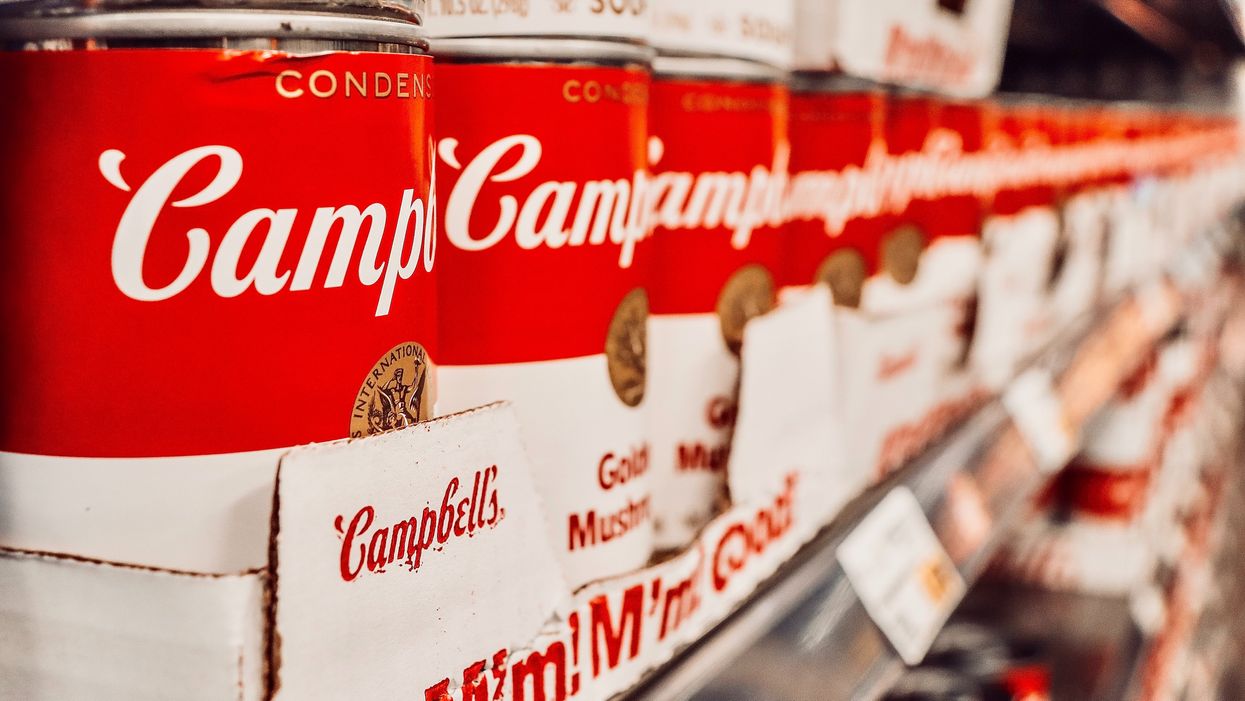
After months of elevated inflation and interest rate hikes that have the potential to cool demand, consumers are showing more signs of shifting behavior.
It’s showing up in retail sales data, but there’s also evidence in the observations of the brands responsible for grocery store staples.
The latest example came this week from Campbell Soup Company. CEO Mark Clouse told analysts that the consumer continues to be “resilient” despite continued price increases on food, but found that “consumers are beginning to feel that pressure” as time goes on.
This shows up in the categories they are buying. Overall, Clouse said Campbell sees a shift toward shelf-stable items, and away from more expensive prepared foods.
There is also change in when they make purchases. People are buying more at the beginning of the month. That’s because they are stretching paychecks as long as possible.
These shifts change how the company is communicating with consumers.
Clouse said the changes in behavior are an opportunity to “focus on value within our messaging without necessarily having to chase pricing all the way down.”
“No question that it's important that we protect affordability and that we make that relevant in the categories that we're in," Clouse said. "But I also think there's a lot of ways to frame value in different ways, right?”
A meal cooked with condensed soup may be cheaper than picking up a frozen item or ordering out. Consumers just need a reminder. Even within Campbell’s own portfolio, the company can elevate brands that have more value now, even if they may not always get the limelight.
The open question is whether the shift in behavior will begin to show up in the results of the companies that have raised prices. Campbell’s overall net sales grew 5% for the quarter ended April 30, while gross profit margins held steady around 30%. But the category-level results were more uneven. U.S. soup sales declined 11%, though the company said that was owed to comparisons with the quarter when supply chains reopened a year ago and expressed confidence that the category is seeing a longer-term resurgence as more people cook at home following the pandemic. Snacks, which includes Goldfish and Pepperidge Farm, were up 12% And while net sales increased overall, the amount of products people are buying is declining. Volumes were down 7%.
These are trends happening across the grocery store. Campbell is continuing to compete. It is leading with iconic brands, and a host of different ways to consume them. It is following that up with innovation that makes the products stand out. Then, it is driving home messaging that shows consumers how to fit the products into their lives, and even their tightening spending plans.
Campbell Soup is more than 150 years old, and has seen plenty of difficult economic environments. It is also a different business today, and will continue to evolve. At the end of the day, continued execution is what’s required.
“If it's good food, people are going to buy it, especially if it's a great value,” Clouse said.