Shopper Experience
18 April 2023
Google adds shipping, returns info to shopping listings
Merchants can show the info right alongside pricing.

Photo by Alex Dudar on Unsplash
Merchants can show the info right alongside pricing.

In ecommerce, logistics are a customer-facing function. The latest proof comes from Google.
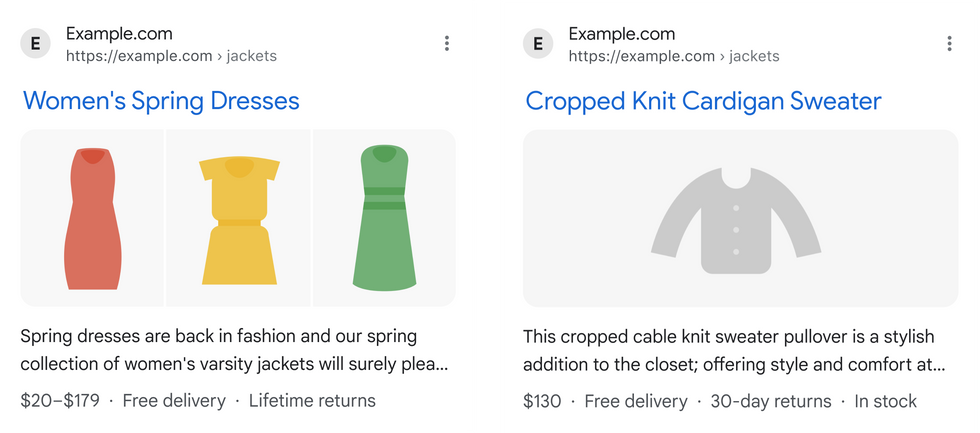
The search engine is expanding the display of information about shipping and returns in product listings on merchant sites. This is designed to provide consumers with all of the information not just about what a product is and how much it costs, but also when it will arrive and how easy it is to send back if it’s not quite right.
“When shopping, people want to know the total price for the products they're purchasing, including the shipping price. Shipping speed, cost, and return policy are major factors considered by shoppers when buying products online,” a Google Search Central update states. “Often, consumers will not complete a purchase because the shipping cost is too high, the shipping speed is not fast enough, or return information isn't clear. Therefore, displaying shipping and return information clearly up front is critical for the success of your online sales.”
The functionality is available in the U.S., and will soon roll out in other countries.
Google said it is also making it easier to monitor and fix the structured data required to enable the shipping and returns display. Google will send warnings to merchants that don’t have the information, or when it was added incorrectly.
The shipping and returns information can now be displayed next to product pricing info at the bottom of a listing.
The new feature comes at a time when return policies appear to be in a state of flux. Consumers are accustomed to free and flexible returns from ecommerce platforms that sought to make buying online seamless, but mounting logistics costs and higher return rates are pressuring bottom lines at brands and retailers. That’s prompting leaders to rethink the longstanding freebies. Last week, The Information reported that Amazon will begin charging a $1 fee for returns made to a UPS store when there is a Whole Foods, Amazon Fresh or Kohl’s closer to the delivery address. While this looks like a targeted test, it’s a reminder that return policies aren’t always uniform. So making it easy for consumers to access information can also provide a clearer path to clicking “Buy.”
This is the first significant shopping feature to roll out from Google in 2023 following a busy 2022. Last year, the company made a host of upgrades to shopping listings, as it sought to embed commerce within the primary search experience. The updates ranged from augmented reality shopping tools to price comparison. Given that flurry of activity, this likely won’t be the last feature update of the year.Campbell Soup Company CEO Mark Clouse offered thoughts on messaging amid inflationary shifts in consumer behavior.
After months of elevated inflation and interest rate hikes that have the potential to cool demand, consumers are showing more signs of shifting behavior.
It’s showing up in retail sales data, but there’s also evidence in the observations of the brands responsible for grocery store staples.
The latest example came this week from Campbell Soup Company. CEO Mark Clouse told analysts that the consumer continues to be “resilient” despite continued price increases on food, but found that “consumers are beginning to feel that pressure” as time goes on.
This shows up in the categories they are buying. Overall, Clouse said Campbell sees a shift toward shelf-stable items, and away from more expensive prepared foods.
There is also change in when they make purchases. People are buying more at the beginning of the month. That’s because they are stretching paychecks as long as possible.
These shifts change how the company is communicating with consumers.
Clouse said the changes in behavior are an opportunity to “focus on value within our messaging without necessarily having to chase pricing all the way down.”
“No question that it's important that we protect affordability and that we make that relevant in the categories that we're in," Clouse said. "But I also think there's a lot of ways to frame value in different ways, right?”
A meal cooked with condensed soup may be cheaper than picking up a frozen item or ordering out. Consumers just need a reminder. Even within Campbell’s own portfolio, the company can elevate brands that have more value now, even if they may not always get the limelight.
The open question is whether the shift in behavior will begin to show up in the results of the companies that have raised prices. Campbell’s overall net sales grew 5% for the quarter ended April 30, while gross profit margins held steady around 30%. But the category-level results were more uneven. U.S. soup sales declined 11%, though the company said that was owed to comparisons with the quarter when supply chains reopened a year ago and expressed confidence that the category is seeing a longer-term resurgence as more people cook at home following the pandemic. Snacks, which includes Goldfish and Pepperidge Farm, were up 12% And while net sales increased overall, the amount of products people are buying is declining. Volumes were down 7%.
These are trends happening across the grocery store. Campbell is continuing to compete. It is leading with iconic brands, and a host of different ways to consume them. It is following that up with innovation that makes the products stand out. Then, it is driving home messaging that shows consumers how to fit the products into their lives, and even their tightening spending plans.
Campbell Soup is more than 150 years old, and has seen plenty of difficult economic environments. It is also a different business today, and will continue to evolve. At the end of the day, continued execution is what’s required.
“If it's good food, people are going to buy it, especially if it's a great value,” Clouse said.